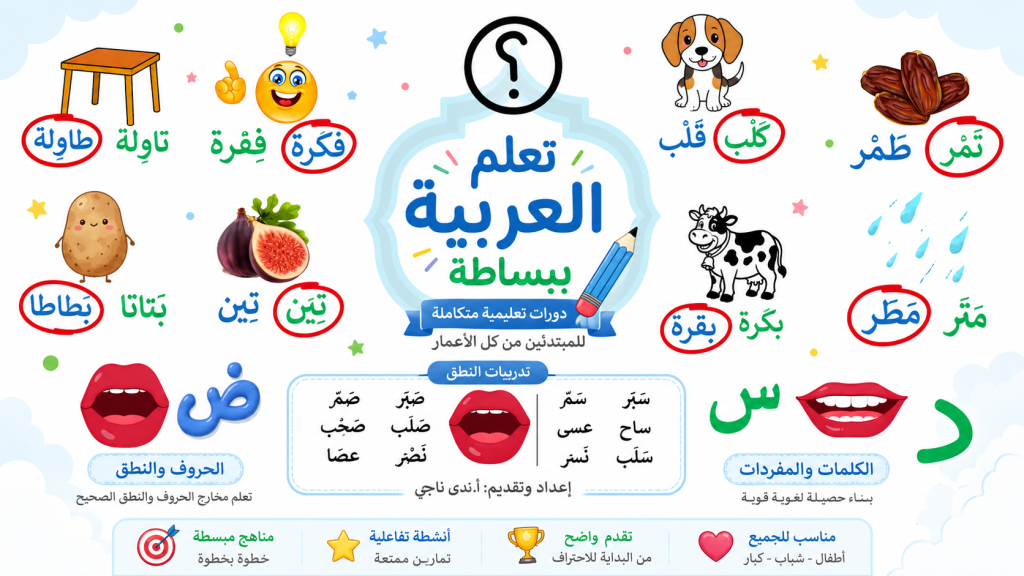
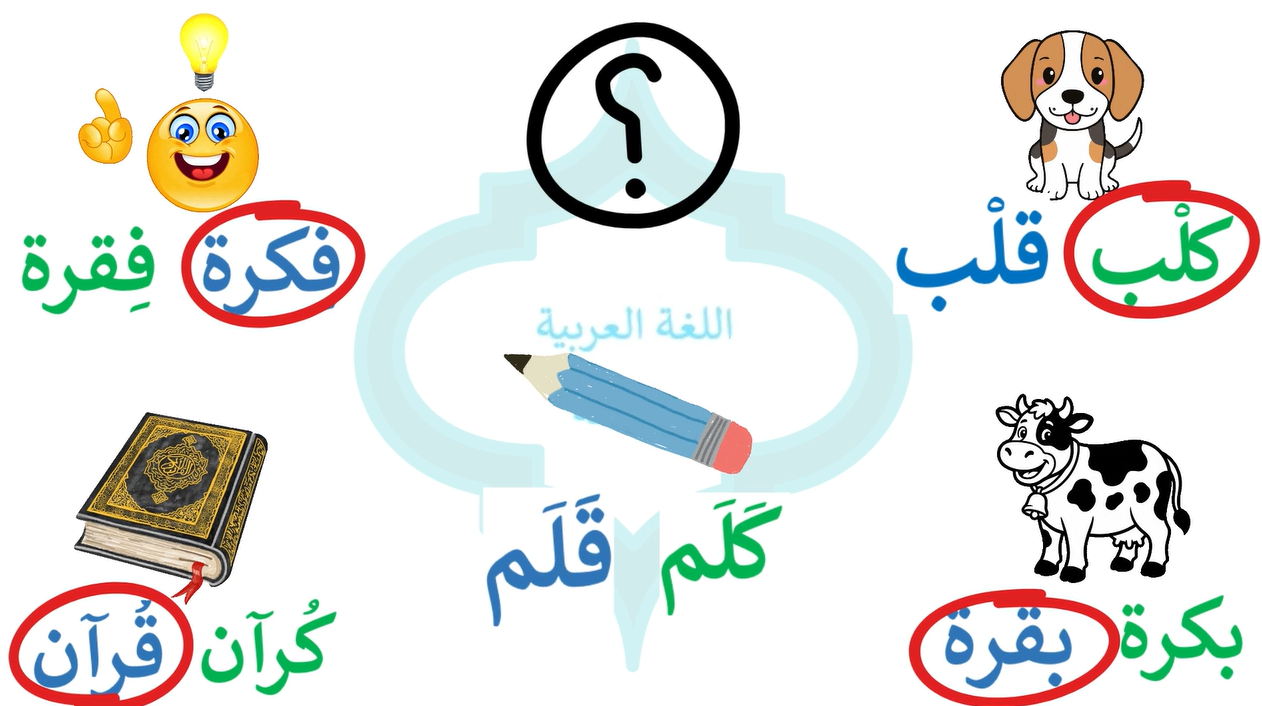
Do you find it challenging to distinguish between similar Arabic sounds? "Pronounce Arabic Simply" is your innovative, practical journey to mastering Arabic phonetic articulations and speaking like a native!
The course focuses primarily on one of the greatest phonetic challenges for non-native speakers: the mechanics of velarization and pharyngealization (Emphatic vs. Plain sounds) and mastering the articulation points (Makharij). In the Arabic language, emphasis is not merely an acoustic ornament; it is an anatomical linguistic feature that completely alters word structure and semantic meaning. Confounding an emphatic sound with its plain counterpart, or failing to engage the correct articulation point, directly leads to a complete shift in the intended meaning and causes communication breakdown.
Specially designed for learners of Arabic as a foreign language, this course provides you with practical tools to control tongue movement and vocal organs, allowing you to speak fluently and confidently without complexity.
By the end of this course, learners will be able to:
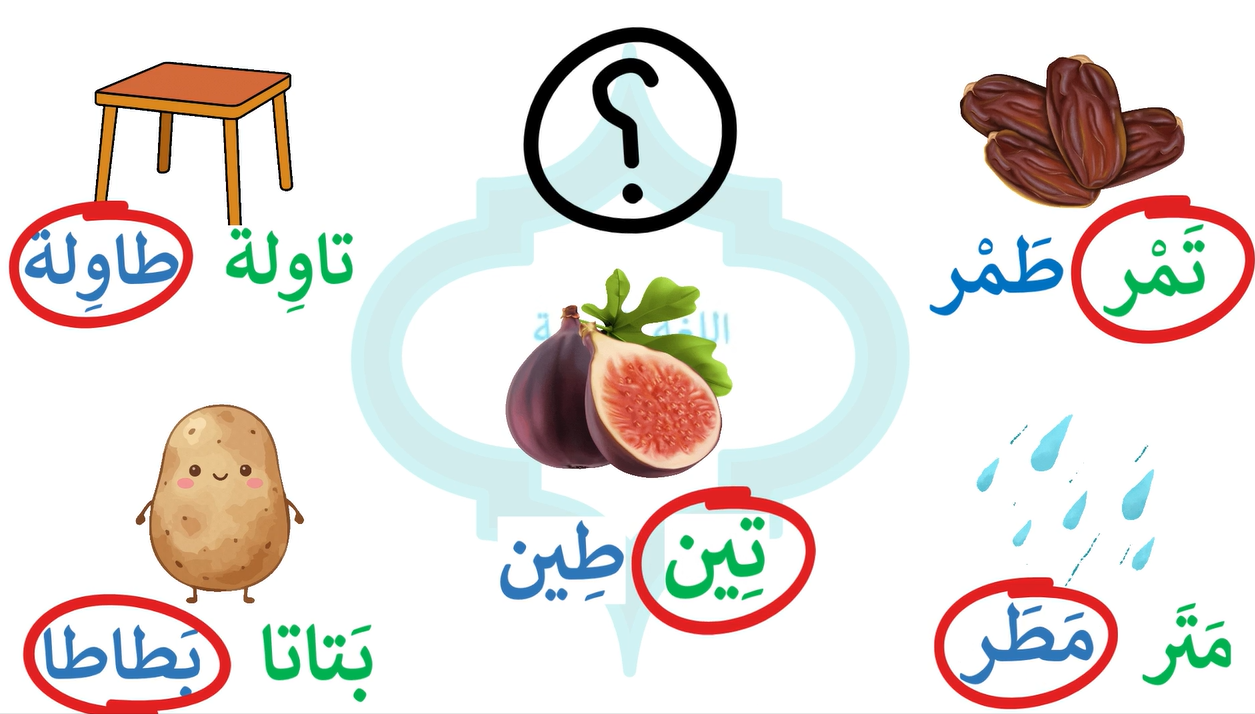
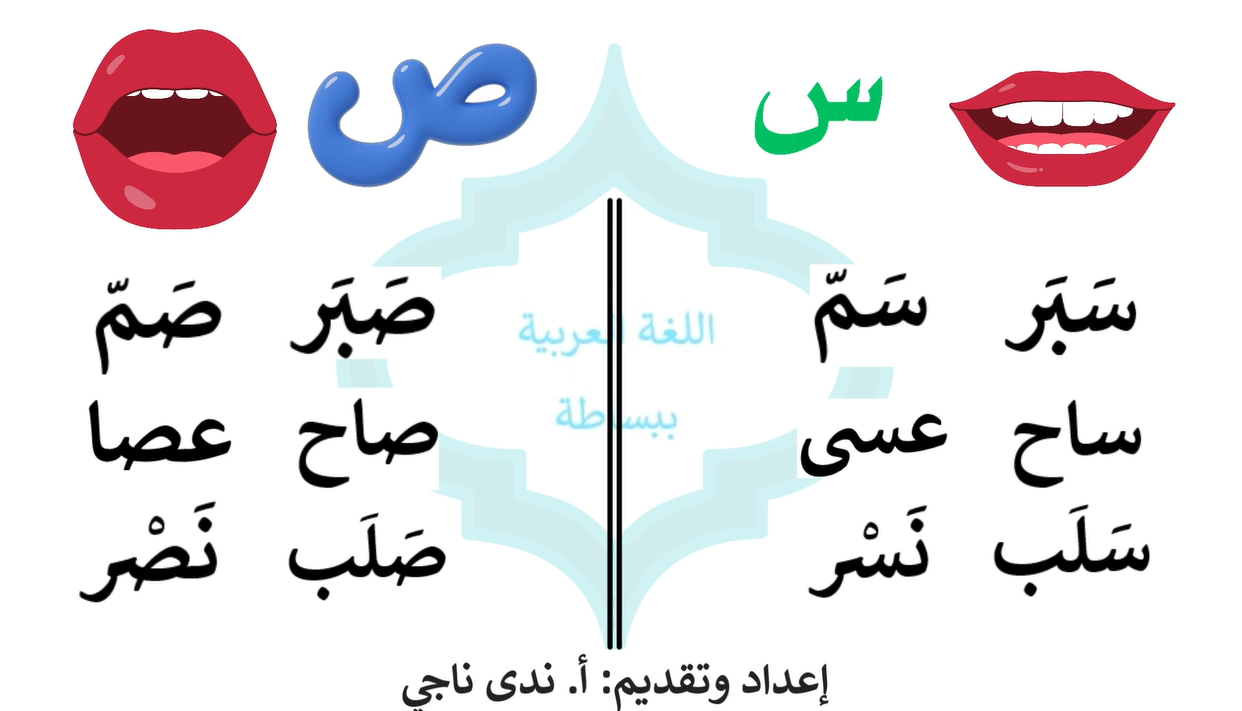
- Master Emphatic and Plain Mechanics: Achieve precise auditory and articulatory distinction between plain sounds and their emphatic counterparts.
- Perfect Articulation Points (Makharij): Enunciate Arabic sounds accurately from their correct anatomical positions.
- Preserve Semantic Meaning: Eliminate pronunciation errors caused by letter substitution, which inadvertently change word meanings and sentence contexts.
- Improve Phonetic Fluency: Reduce the impact of a foreign accent and acquire a natural, fluid intonation during speech.
- Enhance Self-Confidence: Speak with full phonetic awareness, ensuring accuracy in both what is spoken and what is intended.
How to Maximize the Benefit of the Course (Learning Methodology)
To achieve optimal results and train your vocal tract on these new sounds, follow these strategic steps:
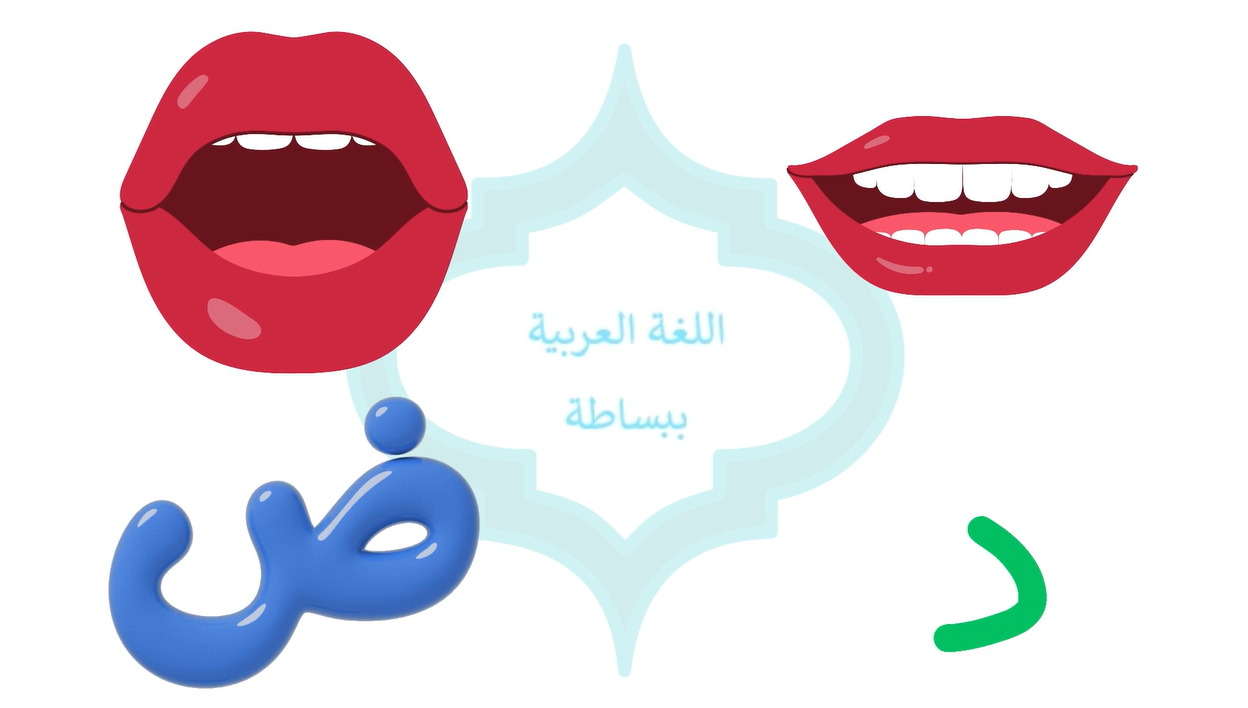
- Conscious Listening & Analysis: Listen intently to the intensity and depth of the sound. Observe the visual and kinetic differences in mouth shape and oral cavity volume between emphatic and plain letters.
- Muscular Shadowing: Repeat the sounds and words immediately after the instructor.
- Contrastive Pair Drills: Identify the correct sound that corresponds to each image/illustration, and repeat it aloud.
- Self-Recording & Evaluation: Record your voice while reading the exercises, then listen back and compare it to the model performance to evaluate your articulation accuracy and emphasis strength.
- Daily Practice & Repetition: Maintain consistent daily vocal exercises; mastering articulation points and emphasis depends primarily on retraining the muscle memory of your vocal tract.